-
 files/Extreme-4x8-Feature.jpg
-
 files/Extremeinstall1.jpg
-
 files/image000001_14.jpg
-
 files/6BD87A9C-86DA-497D-9046-6FB6413297C8.jpg
-
 files/Extreme_Garage.jpg
-
 files/image000000_19.jpg
-
 files/335076975_3549875468672164_741070587602440340_n.jpg
-
 files/343687008_3477992662436924_4312012214344843077_n-768x1024.jpg
-
 files/363797042_660155356148522_6357263878135158813_n-768x1024.jpg
-
 files/364097925_664063235757734_7797478725616602134_n.jpg
-
 files/366956893_669664778530913_4874016111674994672_n-978x1024_e536b651-ca71-4bfe-9a16-1dc37a369fe5.jpg
-
 files/421414411_767343068763083_5752671947079140993_n.jpg
-
 files/425349633_774535474710509_6139604143123413665_n-768x1024.jpg
-
 files/Extreme-6x4-Feature.jpg
-
 files/Extreme-6x6-Feature.jpg
-
 files/Extreme-8x4-Feature.jpg


- Regular price
- $5,200.00
- Sale price
- $4,955.00
- Regular price
- $5,200.00
- Sale price
- $4,955.00
Why Shop With Us?
- 🏅 Authorized Retailer for Survive-a-Storm
- 💲 0% Finance options available
- 🚚 Freight delivery — check your state rate below
- 📞 Speak with an Expert Today: (914) 863-5568
- 🛡️ Full Manufacturers Warranty on All Items
Check your shelter delivery charge
Freight delivery — curbside or accessible end of driveway. 15–20 business days for in-stock products. Installation not included unless separately arranged. View full shipping policy


Returns
We want you to feel comfortable shopping with us, so we've made our return and refund process super easy to understand.
Return Time Frame: You can return things within 30 days after you buy them. But if it's been more than 30 days, we won't be able to accept the return.
Shipping Cost: If something is broken or not right with what you bought, we'll pay for the shipping to send it back. But if you're returning it just because you changed your mind, you'll need to pay for the shipping.
Defective or Broken Products: If what you got isn't working or is broken, tell us within 30 days. We'll help you send it back without extra charges. Once we get it and see the problem, we'll either give you a new one or your money back, including what you paid for shipping.
Change of Mind Returns: If you decide you don't want what you bought, you have 30 days to send it back. You'll need to pay for the shipping back to us, though. Just make sure it's not used and is still in the box. When we receive it, we'll give you your money back for the item, minus the shipping cost.
Refunds: After we get the product you sent back and make sure it's all good, we'll email you. We'll refund the credit card or payment method you used within 7 business days.
Remember, sometimes banks or cards might take a little while to show the refund. If it's been more than 10 business days since we said we're giving you a refund and you don't see it, just email us at support@thenomadsessentials.com.
There may or may not be a restocking fee on returns, depending on the scenario.
If you have more questions about returns or refunds, just reach out to our friendly Customer Support team at support@thenomadsessentials.com.
Delivery Information
Free shipping applies to most locations. Oversized items or deliveries to certain regions may require a surcharge — we’ll confirm before shipping!
All orders are typically processed within 1 to 2 days. Please keep in mind that the cut-off time for same-day processing is 6 p.m; orders placed after this time will be handled the next business day.
Orders typically arrive within 4 to 7 days (free shipping for orders over $200). A flat shipping fee of $15 applies to orders under $200. We currently ship only within the United States and do not offer international shipping.
Most orders are shipped via third-party freight carriers (18-wheelers). If your order includes a freight-shipped item, we will contact you to arrange a curbside delivery. Please ensure your phone number is correct at checkout.
After placing your order, you’ll receive a confirmation email verifying that your order has been received and your credit card has been approved. Your card will only be charged when the item ships, unless it’s backordered, in which case we may need to secure the item for you.
Once your order is received, we begin processing it right away!
This is Standard Delivery Information that may not apply to all products. See product information for specific product shippint timeframes
Price Match Guarantee
We are committed to offering the best prices online. If you find a lower price on another site, let us know, and we’ll beat it! Our goal is for you to feel assured you’re getting the best deal on your purchase.
Our 100% Price Match Guarantee includes the following conditions:
- Promotions like rebates or "buy one, get one free" deals are not eligible.
- The price match cannot apply to discounter or auction sites (e.g., eBay).
- The competitor must be an Authorized Retailer of the item.
The matched price will include the item price, sales tax, and shipping fees.
Price matches do not apply to exchanges or replacement orders.
Please Note: Some exclusions may apply
Customers also bought
Let customers speak for us
EASE OF NAVIGATION ON APP.QUICK DELIVERY!
Great customer service!
Fantastic customer service and communication!

Bike was exactly as it should be . Also arrived in 10 days without a problem. Vetra blazer is alot more plus shipping anywere else.This is an amazing bike for an amazing deal. If your looking for a Blazer get it from Nommad Essentials

A hard to find battery, works great!

It’s one beast of a bike. Had a few issues upon assembly but worked through them. Love the build strength, quality, brakes, and overall fit and finish!

Nomad's were patient and cooperative with our shipping destination hiccup. The Armadillo Horizon 3 meets our expectations. Superior quality fit and finish. A few stand outs include: smooth zippers, noseem blocking mesh screens, mattress as is (no need to use our beloved exped) vestibule screen windows option, attached ladder operation, one person open/close and more. Stormy Wind gust lifted the tent and kicked the ladder back when we were in it.... know now to use included tie down straps in storms. Used 4 nights. Currently no regrets.

The charger you sent me works great. Although I was looking for the charger that is in the pitcher that is why I bought it from this website. Because it showed an image of the same charger I had. The charger you sent me is different. I saw it on other websites for a little cheaper. But went with your sight because it showed me a picture of the charger that I had. Then, you sent me a different charger. I'm still happy the charger works. Thanks.

Great

It took really ling to get here i had my doubts it was coming but yall came through

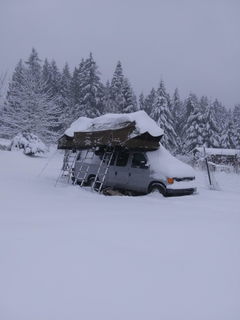
Purchased two 23zeros 5 years ago, the 87 is for my wife and I and both were mounted on our Ford E350 15 passenger van. We spent 3 months living in them during housing transition and I slept in the 87 for over 500 nights these past two years, for health reasons, after I experienced a stroke at our toxic, built in 1948 rental house. I find the tents extremely well built, comfortable and they've proven their durability. We're in the Pacific NW and the tents have withstood extremely high wind gusting over 60mph (duringall night storms), pouring rain, heavy snow load and summer heat. UV on the rain fly has taken a toll but it's still holding it's own, zero water leaks, ever.

Outstanding product. It was a blast to build, very complete and straightforward assembly, great quality materials. The shipping was a small issue as it comes on a 5’ by 6’ skid and without a forklift home delivery is not an option. All the nuts and bolts were sorted and packed perfectly. The off road tires look great and will be tested. Make sure you have a large torque wrench for the 160 ft-lbs nuts!

Assembly wasn’t bad Riding it is a blast. Better than I expected, what a fun bike. Very glad I purchased it

Display screen was way too dim during sunlight i think the back break pads were too close to the disk breaks but probably an easy fix. Other than that the torque and power is awesome
Very smooth my son loves it